

-
The child cannot do a single pull-up.
-
He doesn't have the strength to do a full squat without losing his balance.
-
He can't lift a heavy backpack without getting out of breath.
-
Breathing is shallow, resting heart rate is elevated, immunity is lowered.
-
Movement feels like weakening, not developing.
Children with a senior's body – what does this mean in practice?
Is sarcopenia a disease of older people?
This is how it is classified in medicine.
Sarcopenia is the loss of muscle mass and strength that progresses with age, leading to:
-
decline in independence,
-
increased risk of falls and injuries,
-
weakened immunity,
...and accelerated death.
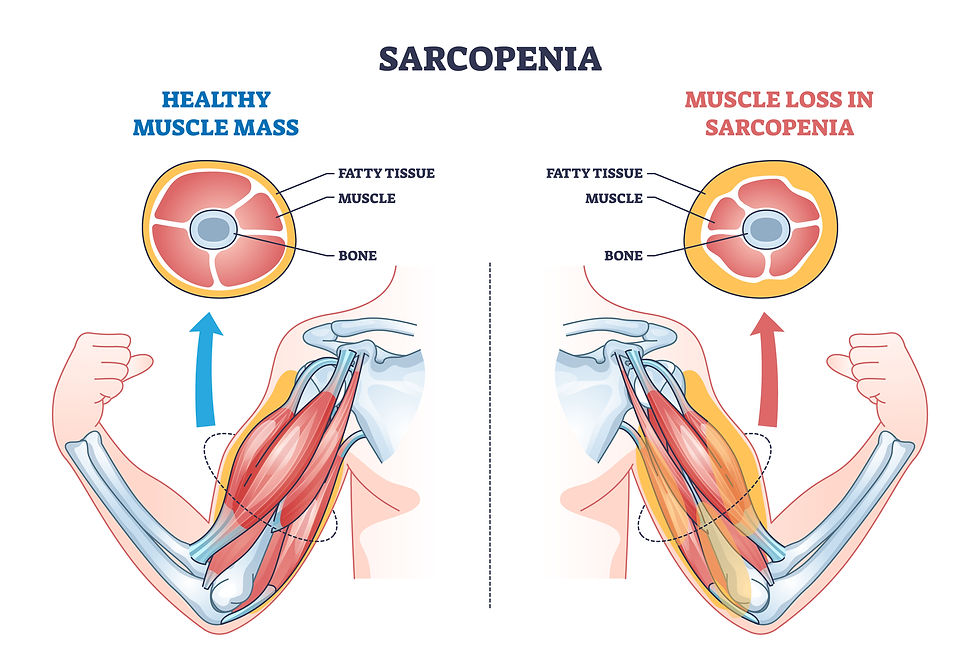
Imagine a world where children have less and less strength, weaker hearts, worse lungs, weaker nervous systems—and no one stops it.
Let's imagine that this degradation happens not over months, not over years, but over decades.
Let us imagine that this problem is documented by WHO reports, studies from the USA, Germany, Japan, France, Canada, Poland – and yet no one acts.
-
USA: Children take 90 seconds longer to run a mile than 30 years ago.
-
Canada: only 10% meets WHO activity standards.
-
Great Britain: Children walk 100 km less per year than their parents.
-
France: 21st century children are 25% physically weaker than in the 1970s.
-
Japan: 30% decrease in hand grip strength.
-
China: Children burn 300–400 kcal less per day than 20 years ago.
-
Australia: systemic decline in capacity from 1961 to 2002.
-
Germany (MoMo Study): stagnation, decline in strength and endurance.
Bibliography
-
WHO. Global action plan on physical activity 2018–2030.
-
CDC. Youth Risk Behavior Surveillance - United States, 2023.
-
CSEP (Canada). Physical Activity Guidelines for Children and Youth.
-
CAVITY. Prevalence of Pediatric Sarcopenia and Associated Outcomes.
-
MoMo Study (Germany). Motorik-Modul 2022.
-
Fitnessgram. Cooper Institute, USA.
-
Eurobarometer – Physical Activity Special Report, 2022.
-
US Department of Health and Human Services. Physical Activity Guidelines.
-
UNESCO. Reimagining Education in the 21st Century, 2021.
-
UNICEF. A World Ready to Learn – Global Education Monitoring, 2020.
> The Decline of Child and Youth Power – 50 Years of Silence, One Simple Solution
“When the body of the younger generation weakens, the entire civilization weakens.”

This is not a metaphor.
THIS IS REALITY.
For over 50 years, children and adolescents have been becoming increasingly physically weaker.
They lose strength, muscle mass, coordination, immunity and performance.
Children enter adulthood in a functional state that previous generations only reached at the age of 60–70.
Not because of illness.
Due to systemic inaction.
Because of the silence of adults.
We do not describe a problem just to name it.
We describe it to end the silence.
And here's one simple solution that can break it. Now!
Part I – A History of Neglect: How Tests Revealed the Truth and the System Suppressed It
Kraus-Weber Test (1954):
-
USA: 56% of children failed.
-
Europe: only 8% failed.
-
It was a shock. A presidential commission for children's fitness was established.
AAHPERD (1960–1985):
Standard test of strength, endurance, jumping ability, flexibility.
-
Boys 12 years old:
-
6–10 pull-ups,
-
40 sit-ups,
-
VO₂ max > 50 ml/kg/min.
-
Tests from 1950–1980 – high norm as standard.
EUROFIT (since 1988):
Introduced in Europe by the Council of Europe.
-
Bar hang: 25–30 sec.
-
Shuttle run, long jump, test of balance, strength, speed.
Tests today – 2020–2025
Most kids don't do a single pull-up.
-
Hang: 3–5 seconds.
-
Sit-ups: 10–15.
-
VO₂ max: decrease to 38–42 ml/kg/min.
-
And it's not because the children are "genetically inferior."
This is because the system has stopped developing them.
GLOBAL PROBLEM
Part II – Developmental Sarcopenia: Children Entering Life with Senior Bodies
But what if a young person never built muscle mass?
What we see today in children and adolescents is not senile sarcopenia.
IT'S SOMETHING WORSE. IT'S DEVELOPMENTAL SARCOPENIA. AND IT AFFECTS THE 21ST CENTURY GENERATION OF CHILDREN.
These are not rare cases.
THIS IS BECOMING THE NORM.
Names that should be mentioned – because they reflect the scale of the phenomenon
Although these concepts are almost absent in the public sphere, they have been appearing in the scientific literature for years:
-
Pediatric sarcopenia – refers to children who never built muscle that could be lost later.
-
Dynapenia – a loss of muscle strength with apparently normal muscle mass – a phenomenon occurring more and more often in young people.
-
Kinetic developmental disability – describes a systemic lack of development of motor skills in children, leading to permanent impairment of their physical functioning.
These three words should now be the everyday language of every school, every counseling center, every ministry of education and health.
What else weakens when muscles don't develop?

Part III – The Pyramid of Silence: Who Knew and Didn't React?
PARENTS
Parents see their children sitting in front of a screen, feeling drained, and out of shape. But they chalk it up to "those times."
Most of them do not know that this is a real biological and health threat.

Many PE teachers are people with passion – but without the tools.
No gym, no management support, no training and no systemic recognition.
PE in primary schools often looks the same as it did 30 years ago.
Competition, ball, a few laps around the room.
There is no room for strength development because no one said it was a priority.
Schools and teachers
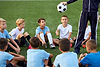
There is no systematic program for developing strength in children.
Teachers are not taught how to work with body weight, with strength machines, or with resistance.
There is no obligation to develop muscles.
There are only “activation” programs that do not replace strength training.
Education system
INTERNATIONAL INSTITUTIONS
-
WHO, UNICEF, OECD – they all have access to data.
-
Reports, programs, and concepts are created.
But there is a lack of implementation, specificity, and political impulse.
MEDIA
They have the greatest striking power.
They can change public awareness in a week.
But they do not consider this topic to be media-worthy.
There will be no media storm until there is a tragedy.
And here the tragedy has been happening silently – for decades.
They have budgets, decide on school curricula, and can initiate changes.
But they don't feel social pressure.
So they don't work.
Systemic silence: from local government to central institutions.
POLITICIANS
It was not the children who disappointed the adults.
IT WAS THE ADULTS WHO FAILED THE CHILDREN.
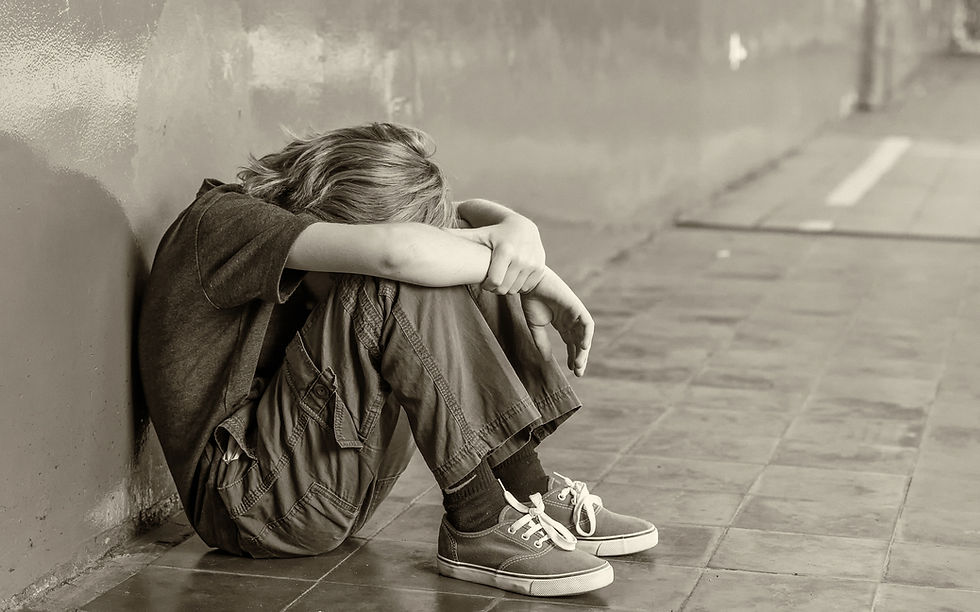
Part IV – Stories That Are Already Happening
Bartek – a boy with cerebral palsy who exercises for life
Bartek was born with cerebral palsy.
At school, his parents were advised not to come to PE.
That it's "not for him."
But Bartek did not give up.
He exercises at home. He has a bench and dumbbells. He exercises with his father's help.
AND HE BEGINS TO BUILD STRENGTH. REAL STRENGTH.
NOT TO COMPETE, BUT TO LIVE.
Bartek wasn't supposed to get this chance. But someone gave it to him.
How many children don't get this chance?
Chojnice – a machine that has been operating continuously for 27 years

In one of the primary schools in Chojnice there is an exercise atlas MANUFACTURED IN 1997.
It still works today.
The children are practicing. The teachers are proud.
Parents look in and admire.
A machine older than most students – but still works.
It's not technology that decides
It's knowing that it's worth it.
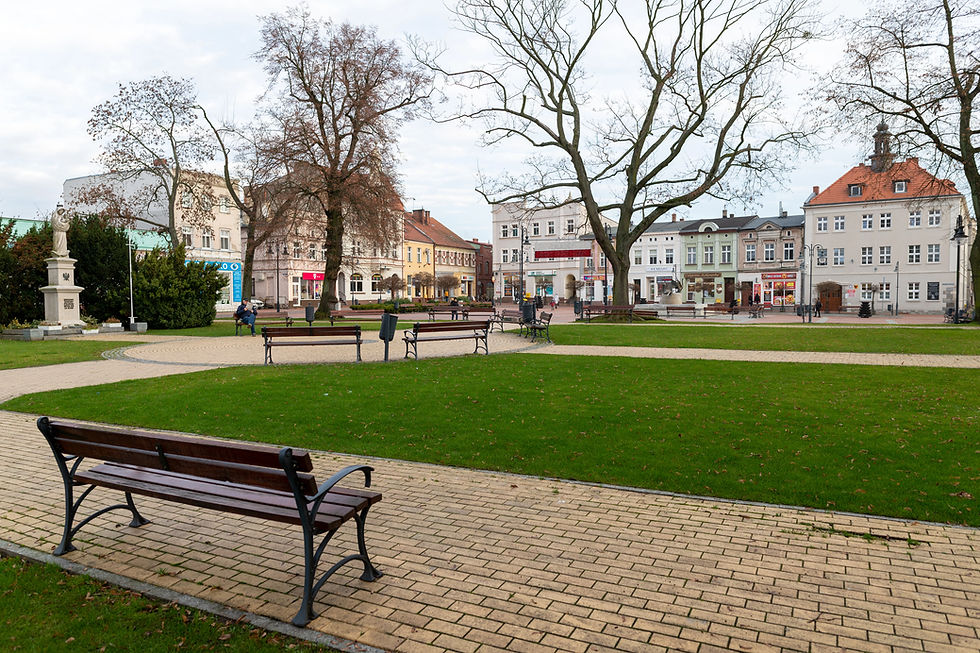
TUCHOLA.
An orphanage where children have strength.
A strength training machine from over two decades ago was being renovated at an orphanage in Tuchola.
Not because it was fashionable.
Because it was used – every day.
Children had access to it.
And adults realized that it was worth bringing her back to life.
It wasn't a grant that made this possible.
It is a human decision that children deserve strength.
The primary school in Gąsowo has had a gym for 25 years.
Every day – students in the morning, parents, teachers, grandparents in the afternoon.
A COMMUNITY BUILT AROUND STRENGTH.
Not about the gadget. About the possibilities.
The director did not wait for the ministry.
He just opened the door.
GASOWO.
A school where everyone practices.
These aren't exceptions. They're proof that it's possible.
Part V – School gym.
Not luxury.
Necessity.

There is no need to look for a new idea anymore.
You just need to implement what already works.
After 50 years of silence, after dozens of reports, after hundreds of unmade decisions —
we don't need another analysis.
We need a decision.
The school gym isn't an experiment. IT'S THE ANSWER!
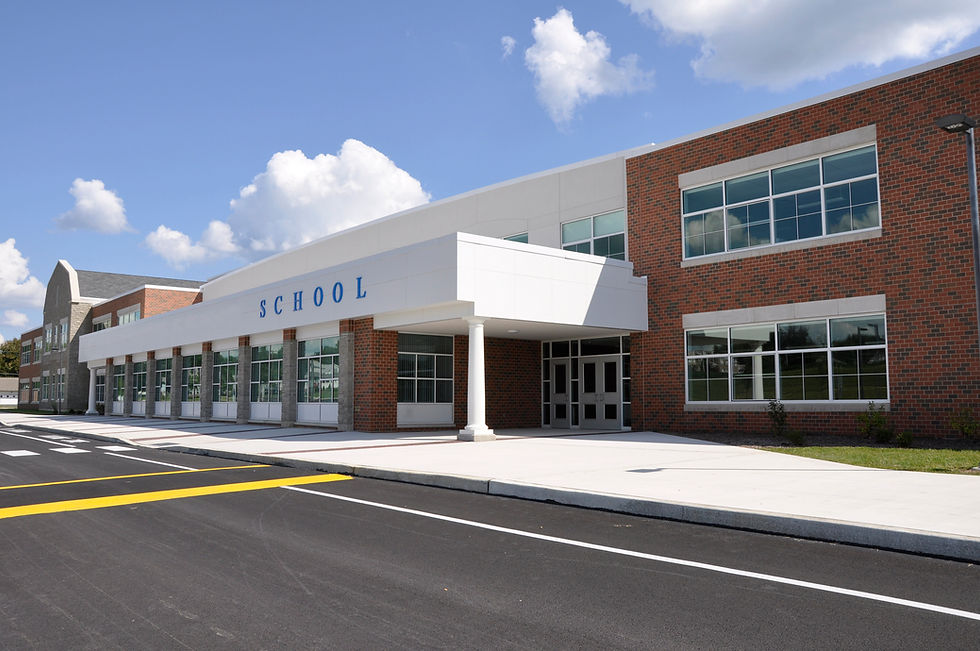
Why a school gym?
Because the development of strength does not happen by accident.
Playing football is not enough.
Running around the pitch is not enough.
Work with resistance is needed.
You need muscles that have something to do.
What does the school gym offer?
-
access to equipment for everyone,
-
organized training,
-
ability to track progress,
-
development of strength, coordination, immunity,
-
equality – everyone works at their own level.
“How to organize it?”
-
A room in school – even a small one.
-
Modular strength equipment – safe, durable, easy to use.
-
A teacher trained in biomechanics does not have to be a personal trainer.
-
A new PE model – with a strength component.
-
Educating parents and communities – strength is not aesthetics. It is health.
This isn't an idea. It's a READY-MADE SOLUTION!
We don't say: "we have to come up with something."
WE SAY:
It's already working! LET'S IMPLEMENT THIS SYSTEMICALLY!
No need for further reports!
No need for further data, tables, or analyses.
WE ALREADY HAVE EVERYTHING!
We have a diagnosis. We have the evidence. We have a solution.
It just takes courage to break the silence and take action.
Part VI – Conclusion. Let us close the silence.
LET'S BUILD STRENGTH!
For the parent:
Ask the school a question:
“Why isn’t my child developing muscle strength?”
Ask yourself:
“Do I want my child to be dependent on the system or capable of living?”
This isn't an accusation. It's an invitation.
You don't have to be a personal trainer.
But you can be someone who builds a generation that is physically and mentally resilient.
For the teacher:
You have the data. You have the report. You have the concrete solution.
Inaction is no longer ignorance. It's a choice.
For a politician:
FAQ
-
1. Why are children and adolescents today weaker than before?
It's not a matter of genes or biology – it's the result of systemic neglect.
Movement has been replaced by the screen.
And the system – instead of noticing and reacting – remains silent.
The result is a dramatic decline in children's strength, muscle mass and performance.
FAQ
-
2. Can we really talk about “muscle atrophy” in children?
Yes, in many cases the muscles never developed.
This phenomenon is known as pediatric sarcopenia – physiological underdevelopment.
FAQ
-
3. What are the effects of underdeveloped muscles in adolescents?
Lack of muscles = weaker heart, lungs, nerves, immunity.
Increased risk of disease, obesity, depression, low self-esteem and low productivity.
FAQ
-
4. What does the term "pediatric sarcopenia" mean?
It is a lack of muscle mass and strength during development – a biological state of health risk.
It is impossible to build a resistant organism on a weak muscular skeleton.
FAQ
-
5. Can a child who appears healthy be physically underdeveloped?
Yes. This phenomenon is called dynapenia – a lack of strength despite seemingly normal weight.
Muscular system too weak to support vital systems.
FAQ
-
6. Can PE in its current form counteract this?
No. Current PE is often a game of appearances.
There are no tools for developing strength.
We need a new model – with a gym, resistance training, and a new teacher.
FAQ
-
7. How can schools rebuild the strength of children and young people?
Space + equipment + people = power.
The school gym is a tool for children's biological and mental recovery.
FAQ
-
8. Can parents make a difference if the system is failing?
Yes. Ask the school, pressure the local government, support your child in getting involved.
Don't explain weakness as the norm.
FAQ
-
9. Why is a school gym more than just equipment?
Because it is a symbol of change and a specific biological effect.
This is a place to build strength, health, self-confidence and mental resilience.